
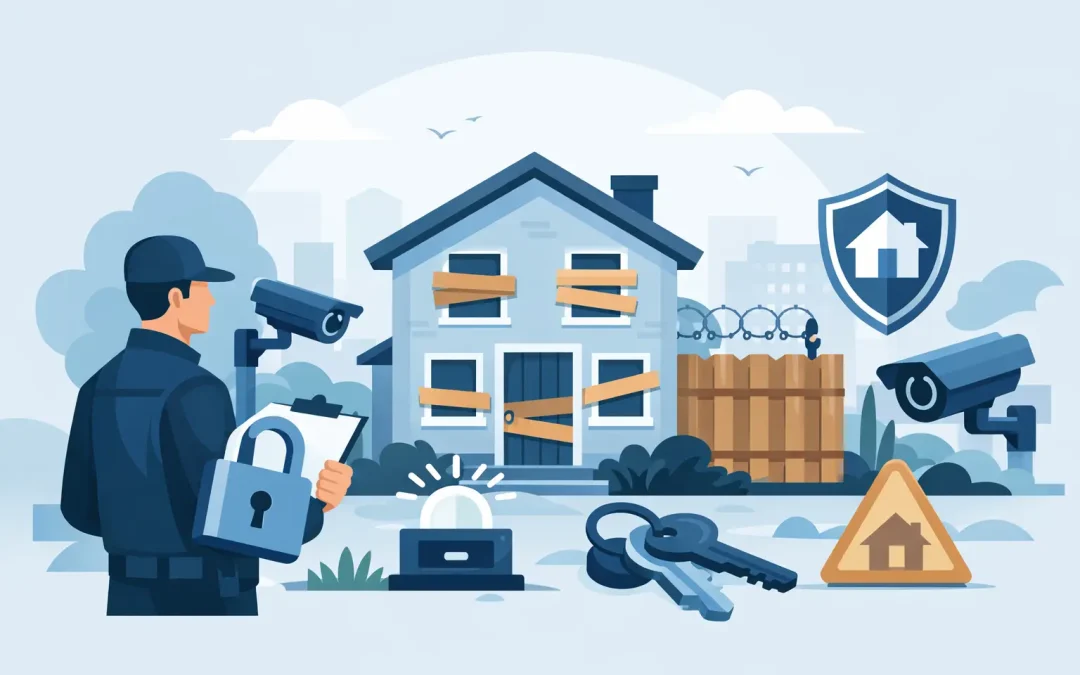
An empty property can attract the wrong kind of attention faster than most owners expect. A house with post behind the door, no lights on, and a gate left swinging open quickly starts to look easy to target. If you are wondering how to secure vacant property, the key is to act early, cover the obvious weak points, and make the building look managed rather than forgotten.
Vacant homes, flats, shops and offices face a different set of risks from occupied buildings. Burglary is only one part of it. You also have vandalism, unauthorised access, weather damage made worse by delayed repairs, and insurance problems if basic security has been ignored. The longer a property is left empty, the more those risks tend to grow.
Why vacant buildings are more vulnerable
A lived-in property has natural protection. People come and go, parcels get collected, lights switch on, and neighbours recognise what looks normal. Once a building is empty, those signals disappear. That is often enough for opportunists to test a door, force a window, or return later with better tools.
There is also a practical issue many owners miss. Small faults become bigger when nobody spots them. A loose lock, a warped uPVC door, or a damaged window handle might seem minor at first, but on a vacant property those are the exact weaknesses that get exploited. Security is not just about making forced entry harder. It is also about removing easy excuses for someone to get in.
How to secure vacant property from the start
The first job is to secure every point of entry properly, not just the front door. That means external doors, rear access, patio doors, windows, side gates, garages and outbuildings. If any lock is damaged, sticking, loose or outdated, it should be repaired or replaced before the property sits empty for any length of time.
In many cases, changing the locks is the sensible starting point. That is especially true after a tenant moves out, a sale falls through, keys have gone missing, or multiple contractors have had access over time. You do not want to rely on guesswork about who may still have a working key. A lock change or rekey can quickly give you control again.
The right choice depends on the property. A standard house may need upgraded front and back door locks, while a shop or office may need shutter locks, restricted key systems or better control over staff access. If the property has uPVC doors or windows, make sure the mechanism itself is in good order. A quality cylinder is only part of the picture if the handle or gearbox is failing.
Make forced entry look difficult
Most break-ins are not carried out by people looking for a challenge. They are looking for a quick win. Your goal is to make the property appear checked, maintained and awkward to enter.
Good external lighting helps, particularly around front doors, side passages and rear access points. Motion-sensor lighting is often more practical than leaving lights on constantly, but placement matters. You want enough coverage to remove dark approach routes without creating obvious glare or dead spots.
Visible security measures also make a difference. Alarm boxes, CCTV signage and well-maintained locks send a clear message that the building is being looked after. Whether you install monitored systems depends on budget, the property type and how long it will be empty. For a short vacancy, better physical security may be enough. For a longer empty period, alarms and cameras often become worthwhile.
Boarding can be appropriate in some situations, but it is not always the best first option. Heavy-duty boarding is useful after a break-in, for severe damage, or where a site is in a high-risk area. The trade-off is that it can also advertise that the building is empty if done poorly. In many cases, secure doors, upgraded locks and discreet visible deterrents work better than making the place look abandoned.
Do not overlook windows, garages and side access
Owners often concentrate on the main entrance and forget the less obvious routes in. A rear kitchen window, a garage side door or a shared alley gate can be much easier to exploit than the front of the building.
Check every ground-floor window lock and any accessible first-floor windows, especially where there is a flat roof, extension or bin store beneath. If keys are still in window locks, remove them. Garages and sheds should be secured as well, not only to protect tools and belongings but because they often contain ladders or equipment that can be used to get into the main building.
Gates and fencing matter more than people think. They will not stop a determined intruder on their own, but they do slow access and reduce privacy for anyone trying to force a door or window. If rear access is open and hidden, that is where a lot of trouble starts.
Keep the property looking occupied and managed
One of the most effective ways to secure a vacant property is to stop it looking vacant at all. That does not mean pretending someone lives there full time. It means avoiding the obvious signs of neglect.
Post should be removed regularly. Bins should not be left overflowing. Gardens and hedges need basic maintenance so the place does not start to look empty from the street. If there is a driveway, occasional vehicle movement can help. Timed lighting can also create some normal evening activity, although it should be used sensibly rather than on an obvious pattern.
Neighbours can be a real asset here. If you trust the people nearby, let them know the property is empty and ask them to flag anything unusual. A building that has local eyes on it is far less exposed than one everyone assumes has been left to itself.
Check your insurance before you assume you are covered
This is where a lot of owners get caught out. Standard insurance terms often change once a property is unoccupied for a certain period. That may mean stricter conditions around inspections, lock standards, water shut-off, alarm use or even complete limits on some types of claim.
Before leaving any property empty, read the policy terms carefully. If the insurer requires weekly checks and you do not carry them out, that can become a problem later. If they require specific locks on final exit doors, it is worth sorting that sooner rather than after an attempted break-in.
Security and insurance go together. The better documented and maintained the property is, the easier it is to show you have taken reasonable precautions.
Vacant property security for landlords and business owners
Landlords often face gaps between tenancies, and those gaps can be longer than expected. If keys have been copied, contractors have come and gone, or an eviction has taken place, lock changes should be treated as standard rather than optional. It is a simple way to remove uncertainty.
For business premises, the risk can be more complex. Empty commercial units may contain stock, equipment, copper piping, data storage or cash handling equipment. They are also more likely to attract repeated attention if the frontage clearly shows closure. In those cases, stronger lock upgrades, shutter security and regular site checks can be more important than cosmetic measures.
If the property has already been targeted, do not just replace like for like. Review how access was gained and fix the weakness properly. That may mean upgrading cylinders, repairing door alignment, replacing failed handles or securing secondary access points that were previously ignored.
When to call a locksmith
If a lock is faulty, keys are unaccounted for, or the property has been left vulnerable after a move-out or break-in, getting a locksmith involved early saves time and stress later. Fast attendance matters because an unsecured vacant building can go from minor concern to urgent problem very quickly.
A professional locksmith can assess weak points, change locks, rekey suitable locks, repair damaged mechanisms and advise on practical upgrades without overcomplicating the job. For owners in the North East, a local mobile service such as Mobile Locksmith Wallsend can be especially useful when a property needs securing quickly and you cannot afford delays.
The best approach is rarely about one dramatic fix. It is about layering sensible measures so the property is harder to access, easier to monitor and clearly not being ignored. If you deal with the locks, control who has keys, keep the exterior looking managed and respond quickly to faults, you put yourself in a far stronger position from day one.
An empty building does not have to be an easy target. Secure it like someone is checking on it, because that visible sense of control is often what makes trouble move on elsewhere.