
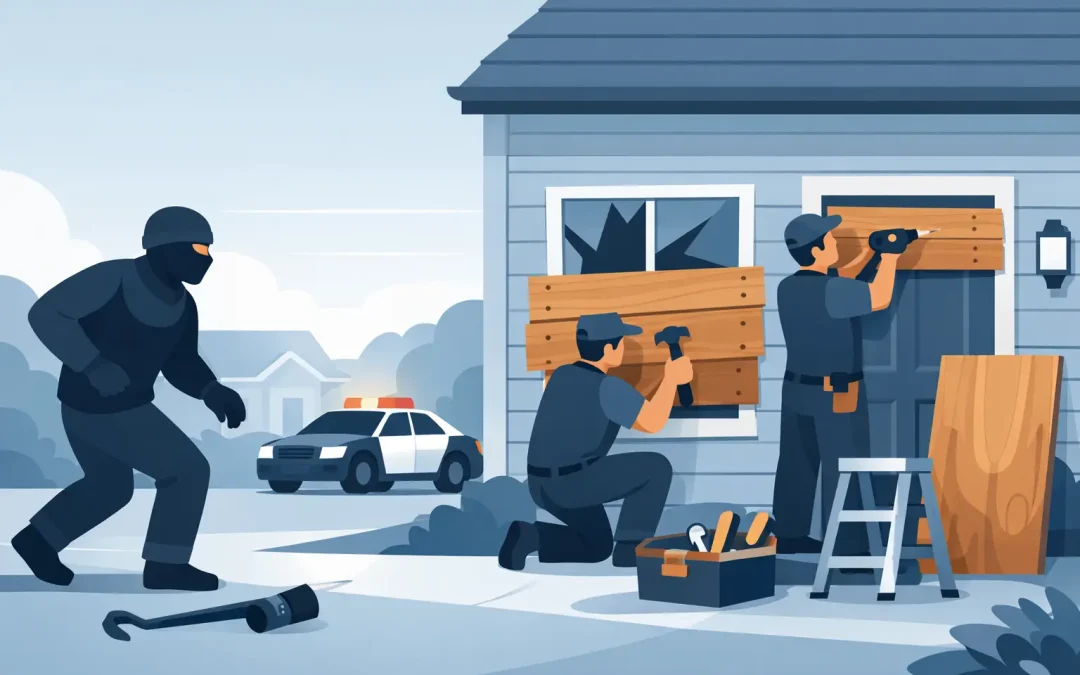
A broken window, splintered door panel or damaged lock leaves more than a mess behind. It can leave your home or business exposed overnight. Boarding up after a break-in is the immediate step that helps prevent further access, protects the property from the weather and gives you space to deal with the locks, police report and insurance properly.
The priority is simple: make the property safe without creating new damage or destroying evidence. If you are in Wallsend or elsewhere in the North East and the entry point cannot be secured, act quickly and get professional help rather than trying to manage a vulnerable door alone.
First, make sure the property is safe
If you believe the intruder may still be inside, do not enter. Move to a safe place and call the police. The same applies if you have returned to find a forced door or smashed glass and are unsure when it happened. Your safety comes before securing the building.
Once the police have confirmed it is safe to enter, avoid touching damaged locks, door handles, broken glass or any items that may be relevant to their investigation. Take clear photographs from a sensible distance if you can do so safely. These may help the police and your insurer record the damage before repairs begin.
For a shop, office, workshop or rented property, tell the relevant keyholder, landlord or manager straight away. There may be an alarm company, insurer or building management process to follow. But do not wait until the morning if the premises cannot be secured. An open entrance can invite a second break-in, water damage and liability concerns.
Why boarding up after a break-in matters
A temporary board is not a complete security repair, but it is a vital first barrier. It covers a smashed window, damaged glazed panel or broken section of door so the building is not left open to passers-by, opportunists, rain or wind.
It also gives you control over the next decision. You may need a glazier for a shattered sealed unit, a door specialist for a cracked composite or timber door, or a locksmith to repair the mechanism and replace compromised locks. A secure temporary closure lets those jobs be arranged properly rather than rushed in the middle of a difficult night.
The quality of the boarding matters. Thin material loosely fixed over a frame may be easy to remove and can cause further damage. A professional temporary boarding should be measured to the opening, firmly fixed and fitted in a way that protects the remaining frame where possible. It needs to keep people out while allowing the property to be safely occupied or locked up.
Secure the locks as well as the opening
A boarded window does not solve a lock that has been snapped, drilled, bent or forced. If keys were stolen, lost during the incident or could have been copied, the safest approach is usually to change or rekey the affected locks. Simply fitting a board over the damage may leave the intruder with a working key or a weakened cylinder.
Check every access point, not only the one used to get in. Look at front and back doors, patio doors, uPVC windows, garage doors, side gates and any communal entrance you are responsible for. Burglars may try more than one route, and attempted damage is not always obvious in poor light.
For uPVC doors, warning signs can include a loose handle, a stiff key, a door that no longer lifts or closes cleanly, and a cylinder that turns without operating the lock correctly. Do not force it. A damaged multipoint locking mechanism can fail completely, leaving the door either open or impossible to secure.
Mobile Locksmith Wallsend can attend post-break-in situations to secure damaged locks, replace cylinders, repair suitable uPVC mechanisms and advise on practical upgrades. The aim is not to sell unnecessary work. It is to restore a secure, usable entrance as quickly as the condition of the door allows.
What you can do while waiting for help
Keep children, pets and visitors away from broken glass, exposed screws and unstable door panels. If the entry point faces a public pavement or shared area, make the hazard visible from a safe distance. Avoid leaving tools, ladders or loose materials outside, as they could make it easier for someone else to gain access.
If you must remain at the property, stay in a secure room away from the damaged entrance where possible. Turn on exterior lighting and keep valuable items out of sight. Do not post that the property has been broken into on social media while you are still trying to secure it, as this can unintentionally advertise that the building is vulnerable.
It is sensible to gather what you need for a locksmith or insurer: photographs of the damage, details of any stolen keys, the make of the door or window if known, and your policy information. This saves time, but do not delay urgent boarding or lock work just to find paperwork.
Temporary repairs versus full repairs
There is a trade-off after a break-in. A fast temporary board can make the premises safe now, while a full replacement door, glazed unit or frame repair may take longer. That is often the right approach, especially outside normal supplier hours.
However, a temporary fix should not become a forgotten permanent solution. Arrange follow-up work promptly, particularly where a fire door, commercial entrance, communal door or escape route is involved. Businesses also need to consider access for staff, customers and deliveries. A board placed across the wrong opening can create operational and safety problems, so the repair plan should suit the building.
For homeowners, the best long-term answer depends on how entry was gained. If glass was smashed but the lock remained intact, glazing repair and a security review may be enough. If the lock was snapped or the door frame split, replacement hardware and reinforcement could be necessary. A good locksmith will explain what is urgent, what can wait and what will genuinely improve security.
Tell your insurer, but do not leave the property open
Most insurers expect reasonable steps to prevent further loss. That normally means reporting the incident and securing the property as soon as possible. Keep receipts, photographs and notes of emergency work, including boarding and lock changes.
Policies vary, so do not assume your insurer will tell you exactly which contractor to use or that every upgrade is automatically covered. Emergency work should focus first on making the property secure. If you are considering a more extensive replacement door or security improvement, ask about the claim process before committing where time allows.
Landlords should also document communication with tenants and act promptly. A tenant should not be expected to sleep in a property with a door or window that cannot be secured. Equally, tenants should report the damage straight away and avoid making major alterations without agreement unless there is an immediate safety risk.
Preventing a repeat incident
After the immediate shock has passed, it is worth looking at why the entry point failed. Sometimes the problem is outdated lock hardware. Sometimes it is a weak door panel, poor lighting, an exposed key safe or a window left on a latch. The answer is rarely one expensive product for every property.
A sensible security review may include anti-snap cylinders where suitable, aligned and properly working uPVC door locks, stronger door furniture, window lock repairs, external lighting and better key control. For a business, it may also mean reviewing who holds keys, changing access after staff changes and checking that shutters or rear doors lock correctly.
The practical goal is to make forced entry harder, noisier and less worthwhile without making daily access difficult for you. Good security should work every day, not only after something has gone wrong.
A break-in is upsetting, but you do not have to solve every part of it at once. Get the opening safely boarded, make the locks secure, preserve the information your police report and insurer may need, then put a proper repair plan in place. That is how a damaged property starts to feel like yours again.