
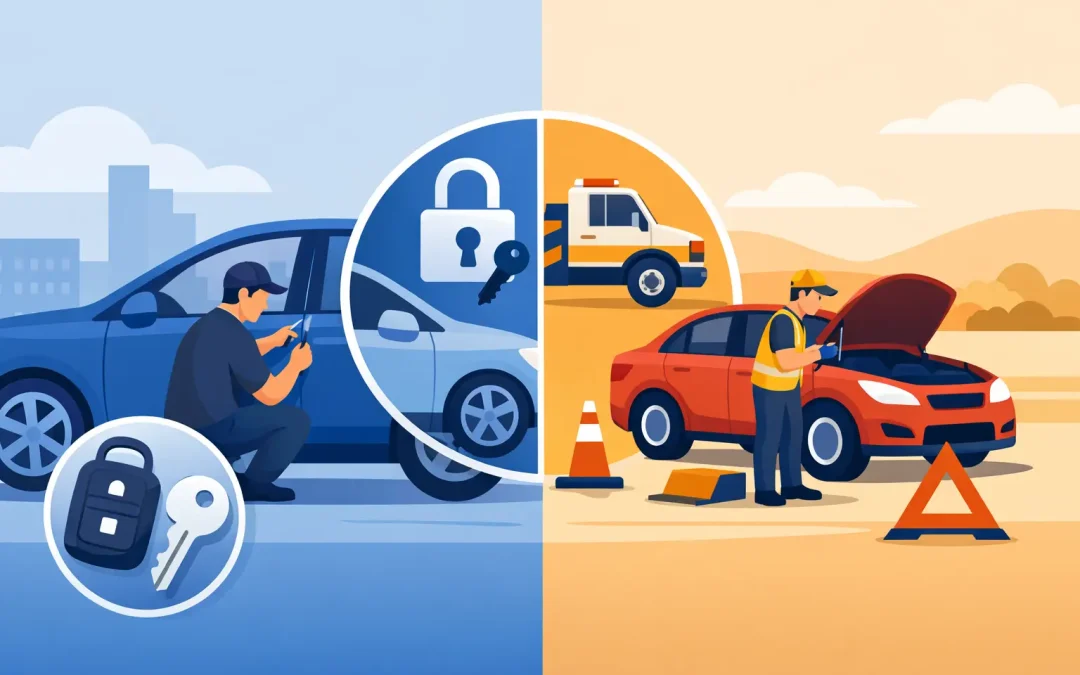
You are standing beside your car in Wallsend, the keys are on the driver’s seat, and the doors have locked behind you. The first question is usually simple: locksmith or roadside assistance? The right answer can save time, prevent damage to your vehicle and get you moving again without turning a stressful moment into a longer wait.
Both services can be helpful, but they do different jobs. Roadside assistance is designed to get a stranded vehicle mobile after a breakdown. A mobile auto locksmith is the specialist to call when the problem is access, keys, locks or a vehicle security system.
Locksmith or roadside assistance: who solves the actual problem?
Roadside providers are often the right first call when your car has a flat battery, a puncture, engine trouble or has run out of fuel. They may also offer a basic lockout service as part of your membership. However, their ability to help depends on the vehicle, the type of lockout and the equipment carried by the patrol.
A locksmith deals directly with the locking and key issue. That includes gaining non-destructive entry where possible, extracting a snapped key, cutting or programming replacement car keys, repairing damaged locks and helping when a key fob has stopped working. If the car will not open because the key is lost, broken, locked inside or no longer recognised, a locksmith is usually the more direct choice.
The difference matters at 11pm in a supermarket car park, outside your home before work, or when you are locked out with a child, pet or essential belongings inside the vehicle. You do not need a general recovery response. You need someone equipped to restore access safely.
When roadside assistance makes sense
Roadside assistance can be a sensible option if you already have cover and the vehicle problem is not primarily about keys or locks. It may be particularly useful when the car is immobilised by a mechanical fault and you need repair at the roadside, towing or transport to a garage.
It can also be worth checking your policy if you have simply left a standard key inside an older vehicle. Some providers can attempt entry, although attendance times and available methods will vary. If they cannot open the car safely, they may still advise you to call a locksmith.
There is a trade-off. Membership cover can feel like the cheapest route, but it may not be the quickest route for a lock-specific emergency. You could wait for a patrol only to find that replacement keys, transponder programming or lock repair are outside the service they can provide.
When a mobile locksmith is the better call
A mobile locksmith is the stronger option when there is a clear security or key fault. This applies to modern vehicles as much as older models, although newer cars often need more specialist equipment because keys contain chips, remotes or proximity technology.
Call a locksmith when you have lost every working key, your key has snapped in the ignition or door, the remote fob has failed, or the central locking will not respond. It is also the practical choice if someone has attempted to force the lock, if you have concerns about stolen keys, or if the vehicle needs securing after a break-in.
A properly equipped auto locksmith can assess the vehicle on site and explain what is possible before work begins. In many cases, entry can be gained without damage. Where a replacement key is needed, the locksmith can identify whether key cutting, programming or both are required. That is a more targeted response than a general roadside call-out.
Car lockouts are not all the same
It is tempting to think every car lockout has one solution: open the door. In reality, the cause changes the right repair.
If keys are visible inside the car, a locksmith may be able to gain entry without affecting the lock. If the key is missing, entry alone will not get you home, so replacement key work may be needed. If the key turns but the door will not open, the issue may be a worn lock, failed linkage or central locking fault. A flat fob battery may be simple, but it can also hide a deeper key or vehicle issue.
This is why forcing a door, using improvised tools or following online tricks is rarely a good idea. Modern vehicle doors contain wiring, side-impact components, weather seals and locking mechanisms that are easy to damage. A bent frame or damaged seal can lead to water ingress, wind noise and a much bigger bill than the original lockout.
What to do while you wait for help
First, make sure you are safe. Move away from traffic where possible and do not stand in a vulnerable position on a busy road. If a child, vulnerable passenger or animal is locked in the vehicle and there is immediate danger from heat, cold or distress, contact the emergency services straight away.
For a standard lockout, have your registration number, vehicle make and model, location and a clear description of the fault ready. Tell the provider whether the keys are inside, lost, broken or not working. This helps them send the right technician and equipment instead of treating the job as a simple door-opening request.
You should also be prepared to show proof that you own or are authorised to use the vehicle. A professional locksmith will want to protect vehicle security as well as restore your access. If your documents are locked inside, explain this when you call. There are often ways to verify ownership once entry has been gained.
Lost keys, stolen keys and security after access
Getting back into the car is only part of the job when keys are lost or stolen. If somebody could identify the vehicle or knows where it is kept, the security risk may continue after you drive away.
Ask about replacement keys and, where appropriate, removing lost or stolen keys from the vehicle’s system. The correct approach depends on the make, model and age of the car. For some vehicles, a new key can be programmed while the old missing key is prevented from starting the vehicle. This is especially valuable for business vehicles, shared cars and drivers who have lost keys along with identifying paperwork.
If there has been an attempted theft or visible lock damage, do not ignore it because the car still starts. A damaged lock or compromised door can leave the vehicle easier to target again. A locksmith can assess the fault and advise whether repair or replacement is the sensible next step.
Choosing help in Wallsend and the North East
When you need urgent vehicle access, look for a local mobile service that clearly handles automotive lockouts rather than a provider that only covers domestic doors. Ask whether there is a call-out charge, whether the work is insured and whether the technician can deal with your particular key type.
Response time matters, but so does being honest about the job. A trustworthy provider should not promise a fixed solution before hearing the vehicle details. Some cars need key programming, some need a lock repaired, and some can be opened quickly with non-destructive methods. Clear pricing and a straightforward explanation are better signs than vague assurances.
Mobile Locksmith Wallsend provides 24/7 mobile support for vehicle lockouts, lost and broken keys, lock problems and urgent security concerns across Wallsend and the wider North East. The aim is simple: send a qualified professional to the vehicle, deal with the real cause of the problem and help you get back on the road with confidence.
The quickest route is not always the same service
If your vehicle will not start because of a breakdown, roadside assistance is often the right place to begin. If you cannot get into it, cannot use the key or need the vehicle made secure, call a locksmith first. Choosing the specialist for the fault avoids unnecessary waiting and gives your car the careful treatment it deserves.
Keep the number of a trusted local mobile locksmith in your phone before you need it. A lockout is far easier to handle when you already know who can reach you, explain the options clearly and get the job sorted without fuss.