
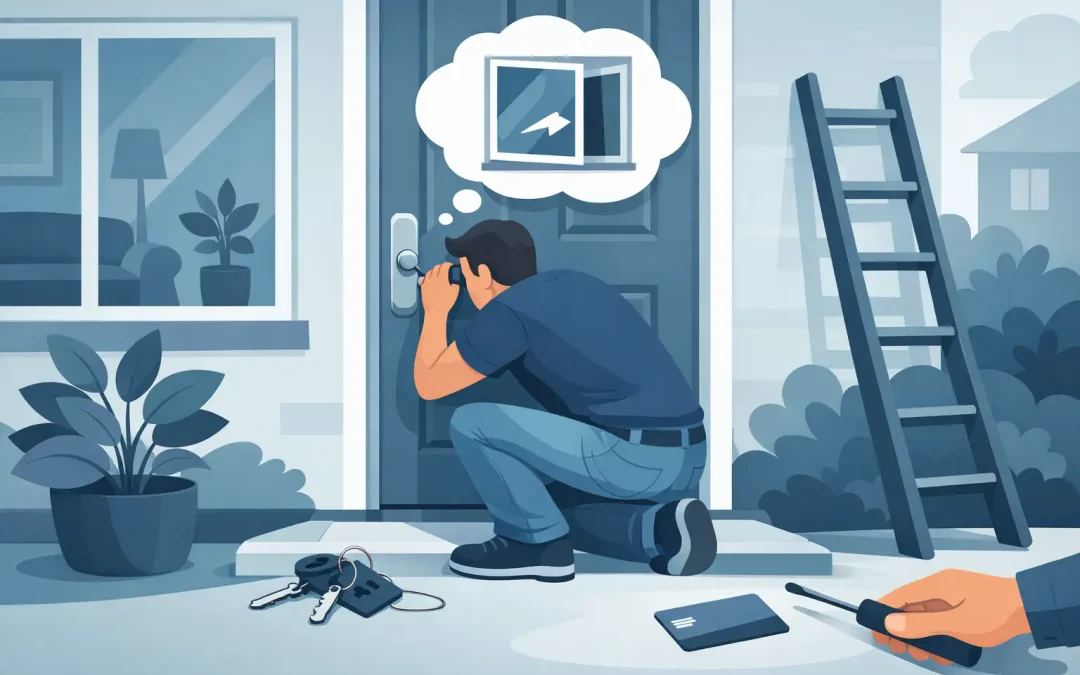
You shut the door, hear the latch click, and realise your keys are still on the hall table. If you are searching for how to get back inside locked house, the first priority is staying calm and avoiding anything that turns a simple lockout into a damaged door, broken window, or expensive repair.
Most house lockouts have a straightforward fix, but the right next step depends on the type of door, the lock fitted, and whether there is another safe way in. A rushed decision can make things worse, especially with uPVC doors, snapped keys, or older locks that are already starting to fail. The fastest solution is often the one that causes the least damage.
How to get back inside locked house without making it worse
Start with the obvious checks, even if you feel flustered. Walk right round the property and see whether a back door, side entrance, or ground-floor window has been left securely on the latch rather than fully locked. If someone else in the household has a key, call them before trying anything else. It sounds basic, but in an emergency people often miss the simplest answer.
If you live in a flat or shared building, check whether a letting agent, landlord, concierge, or trusted neighbour has authorised access or a spare. That can save time, especially late in the evening when you do not want to be standing outside for long.
What you should not do is force the door, lean your weight into a uPVC mechanism, or try random objects in the lock. Credit cards, screwdrivers, wire, and improvised tools rarely solve the problem properly and often leave you with a damaged frame, bent handle, broken cylinder, or a lock that now needs replacing.
Check what type of lock you are dealing with
A standard Yale-style night latch is different from a mortice deadlock, and both are different again from a multipoint uPVC door lock. That matters because the cause of the lockout may not simply be lost keys.
With timber doors, you may have pulled the door shut with the key inside, or the latch may have engaged behind you. With uPVC and composite doors, the issue is sometimes the handle lifting mechanism, a misaligned door, or a gearbox fault inside the lock. If the key turns only part way, feels stiff, or the handle will not move properly, this is less of a simple lockout and more of a lock failure.
That is usually the point where a professional locksmith is the safer option. A trained mobile locksmith can tell the difference quickly and use the right method to regain entry with minimal disruption.
Safe options before you call a locksmith
If there is an open ground-floor window and it can be reached safely without climbing, overreaching, or risking a fall, that may be a practical route back in. The key word is safely. Do not try to squeeze through small openings, stand on unstable bins, or ask a child to climb in. If there is any risk of injury, it is not worth it.
You can also check whether a family member keeps a spare key, or whether you have left one in a secure key safe. If you use a key safe, make sure it is one you can access properly and that the code still works. In a stressful moment, people often enter the wrong combination several times and assume the safe is faulty.
If your door has only latched and not deadlocked, some people are tempted to try slipping the latch. On modern doors and properly fitted locks, this often does not work. On the doors where it can work, an unskilled attempt can damage the strip, frame, or latch. If you are unsure, stop before turning a quick job into a call-out plus repairs.
When it is an emergency
Sometimes a lockout is not just inconvenient. If a child is inside, a cooker is on, a vulnerable person is alone indoors, or the property has been left unsecured, the situation needs urgent attention. The same applies in poor weather, late at night, or when you are locked out somewhere unfamiliar or unsafe.
In those cases, speed matters, but so does choosing the right help. A local emergency locksmith can usually get to you faster than someone travelling in from further afield, and a mobile service is set up to solve the issue on site there and then.
Why forced entry is usually the expensive option
People often think breaking a small pane or forcing a lock will be cheaper than calling a locksmith. In reality, it rarely works out that way. A smashed window means glazing costs, possible boarding, and still no guarantee that you can reach the key or operate the lock. A damaged front door can leave the house insecure until repairs are done.
There is also the issue of insurance. If the door, frame, or lock is damaged through a forced attempt that was not necessary, it may complicate any later claim. Even if insurance is not involved, replacing a multipoint mechanism or door cylinder because of avoidable damage is far more costly than arranging proper entry in the first place.
A non-destructive entry method, where possible, is nearly always the better route. It protects the lock, keeps the property secure, and gets you back inside faster.
When to call a local locksmith
If you have checked for another way in, confirmed there is no spare key available, and the lock is still secure, it is time to call. The same applies straight away if the key has snapped, the lock is jammed, the handle is spinning, or the door is a uPVC model that will not open despite the key turning.
A good emergency locksmith should be clear about response times, pricing, and whether there is a call-out charge. For local residents in Wallsend and across the North East, that reassurance matters. When you are standing outside your own door, you want someone who answers quickly, arrives promptly, and gets the job done without fuss.
Mobile Locksmith Wallsend deals with exactly these situations – urgent house lockouts, failed locks, broken keys, and door mechanisms that stop working when you least expect it. The aim is simple: regain access safely and make sure your property is secure again before the job is finished.
What a locksmith may do on arrival
Once on site, the locksmith will usually confirm occupancy and assess the lock type before choosing the least destructive entry method. If the lock can be opened cleanly, that is normally the first choice. If the lock has failed internally or the key is broken beyond recovery, parts may need repairing or replacing there and then.
This is especially common with uPVC doors. Many people assume they are simply locked out, when the actual problem is a worn gearbox, a failed cylinder, or misalignment that prevents the mechanism from retracting. In that case, entry is only half the job. The lock also needs to work properly afterwards.
How to avoid another house lockout
Once you are back inside, it is worth taking two minutes to stop the same thing happening next week. Keep a spare key with someone you trust nearby, or use a properly fitted key safe if that suits your household better. If your lock has been stiff, sticking, or turning badly for a while, do not ignore it. Locks often give warning signs before they fail completely.
For landlords and business owners, a lockout can affect more than one person. If tenants, staff, or tradespeople rely on access, having a clear spare-key plan matters. If keys have been lost or there is any doubt over who has copies, consider a lock change or rekeying for peace of mind.
If your doors are older, or you have had trouble with a front door that drops, catches, or needs lifting to lock, arrange a repair before it becomes an emergency. Preventative work is usually quicker, cheaper, and far less stressful than standing outside in the rain waiting to get back in.
Being locked out feels urgent because it is. But the best answer to how to get back inside locked house is usually the simplest one: stay calm, avoid forcing anything, and get the right help fast so you can be back indoors safely with the problem properly sorted.